
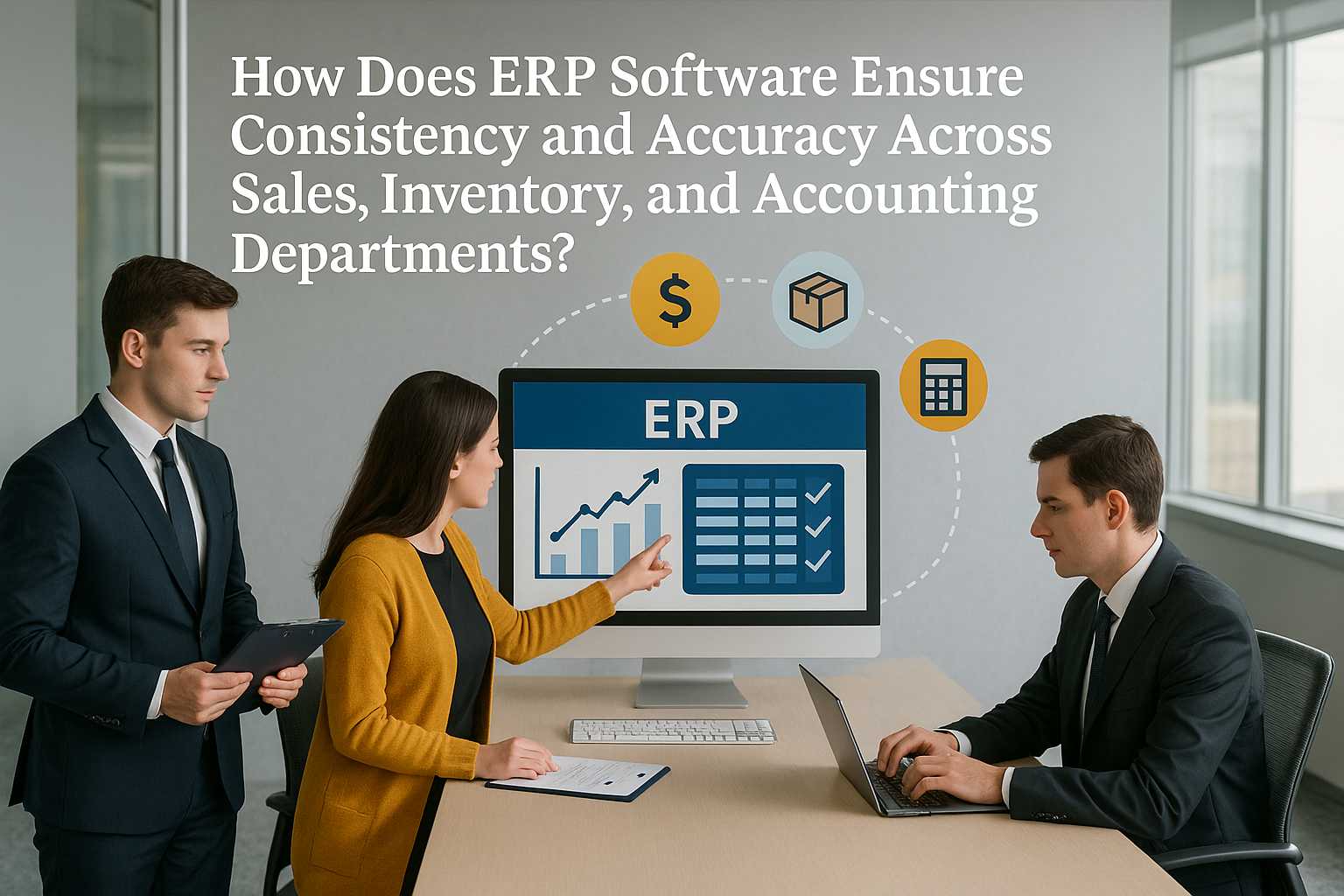

In today’s competitive business environment, seamless coordination between departments isn’t a luxury — it’s a necessity. When sales, inventory, and accounting operate in silos, even a small data mismatch can lead to major losses, inefficiencies, and decision-making errors.
This is where ERP software (Enterprise Resource Planning) plays a transformative role. It acts as a centralized business management platform, ensuring that every transaction, record, and report remains consistent, accurate, and up to date across all departments.
Let’s explore how ERP software — like WiderERP by Zymofar Dynamic Products Pvt. Ltd. — creates operational harmony across sales, inventory, and accounting functions.
Centralized Data — The Single Source of Truth.
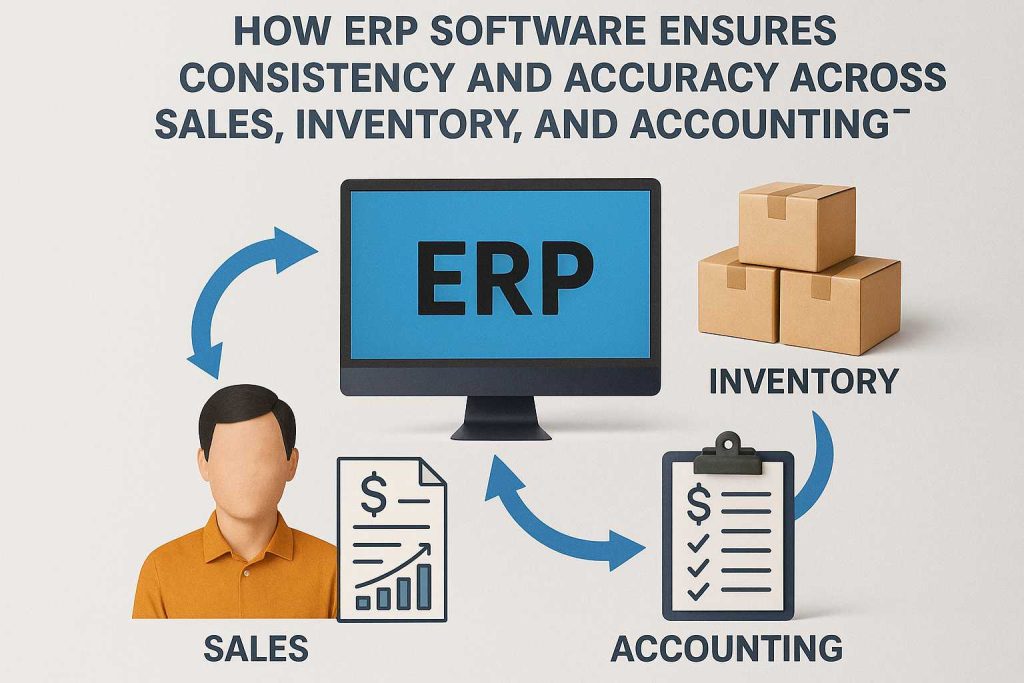
One of the greatest strengths of ERP software is its centralized database.
Instead of maintaining multiple systems for sales, stock, and accounts, ERP stores every transaction in a unified environment.
When a sales invoice is generated:
- The inventory automatically adjusts stock levels in real-time.
- The accounting module records the revenue entry instantly.
- The sales dashboard reflects updated performance metrics.
This eliminates data duplication, prevents version conflicts, and ensures every department works with the same, accurate information.
Real-Time Synchronization Between Modules.
ERP systems are designed to synchronize information instantly.
For example:
- When a sales executive creates a sales order, the inventory module verifies stock availability in real-time.
- Once the item is delivered, the accounting module automatically posts the journal entries — without manual input.
This automation reduces human errors, prevents overselling, and ensures financial data always matches physical stock records.
At Zymofar’s WiderERP, the inter-module synchronization happens dynamically, enabling real-time decision-making without waiting for manual updates or daily reconciliations.
Automated Workflow and Approval Controls.
In traditional systems, approval delays and manual entries can cause data mismatches.
ERP systems solve this by introducing automated workflows with defined user roles and approval hierarchies.
For instance:
- A sales order may require managerial approval before being processed.
- Inventory dispatch happens only after the system validates stock and credit limits.
- Accounting entries are posted automatically once the transaction is finalized.
This ensures accountability, traceability, and consistency throughout every operational process — from quotation to delivery and billing.
Integrated Sales, Purchase, and Stock Management.
Consistency between sales and inventory depends heavily on how the two communicate.
An ERP solution integrates these functions, ensuring that every sale or purchase reflects immediately in stock levels.
Here’s how integration brings harmony:
- Sales Department: Sees only available stock when creating sales orders.
- Inventory Department: Receives automatic alerts on low-stock or overstock situations.
- Accounting Department: Tracks cost of goods sold (COGS) accurately, linked directly to each sales transaction.
This interconnection ensures that there’s no gap between what’s sold, what’s available, and what’s recorded financially.
Error-Free Financial Reconciliation.
Manual reconciliation between stock movement, sales invoices, and accounts often leads to errors.
ERP software automates reconciliation — matching sales invoices with accounting entries and physical stock movements.
Every sales entry automatically:
- Updates receivables in accounting,
- Adjusts stock-out quantity, and
- Reflects real-time profit margins.
This not only speeds up month-end closures but also ensures financial data is always audit-ready and free from manual discrepancies.
Enhanced Accuracy Through Audit Trails and Traceability.
ERP systems maintain detailed audit trails of every transaction — who did what, when, and from where.
This level of transparency prevents unauthorized edits and supports accurate, traceable data management.
If discrepancies occur, managers can trace:
- The user who entered the transaction,
- The exact time it was modified, and
- The source document that triggered the change.
Zymofar’s WiderERP provides user-level access control and complete audit history, ensuring data consistency and accountability at every stage.
Reporting Consistency Across Departments.
With ERP, reports generated by sales, inventory, and accounts departments always align — because they draw from the same unified dataset.
Examples include:
- Sales vs. Stock Reports
- Profit Margin Analysis
- Inventory Valuation Statements
- Customer Aging Reports
The result? Every department reports consistent figures — reducing conflicts during internal reviews or external audits.
Reduction of Human Error Through Automation.
Human dependency is a major cause of inconsistency in manual systems.
ERP automation minimizes manual entries by auto-posting data between modules.
For instance:
- A completed delivery note triggers automatic invoice posting.
- Payments automatically update customer ledgers and reduce outstanding balances.
- Adjustments in stock reflect instantly in both accounting and sales reports.
This reduces repetitive tasks, eliminates double data entry, and improves accuracy across all operational layers.
Real-Time Dashboards for Informed Decision-Making.
ERP provides real-time analytics dashboards showing live data on sales performance, inventory health, and financial KPIs.
This real-time visibility enables management to:
- Identify slow-moving stock,
- Detect revenue leakages,
- Forecast demand accurately, and
- Align sales targets with cash flow insights.
When all departments view the same accurate data, decision-making becomes faster, smarter, and more unified.
Consistency Beyond Operations — Customer Experience.
When sales, inventory, and accounting operate in sync, the end-customer benefits directly.
- No delays due to stock mismatches.
- Accurate invoicing every time.
- Quick order fulfillment with proper documentation.
This leads to higher customer satisfaction, fewer disputes, and better brand reputation — powered by ERP-driven consistency.
Seamless Order-to-Delivery Experience
Customers expect quick, accurate, and transparent service. ERP-driven synchronization enables faster order processing, eliminates manual follow-ups, and ensures precise delivery schedules.
Every stage — quotation, order confirmation, dispatch, and invoice — is seamlessly linked, minimizing delays and improving responsiveness.
This means customers no longer need to wait for updates or face excuses like “stock not available” or “invoice not generated.”
Transparent Communication and Real-Time Updates
With centralized ERP data, customer-facing teams — especially sales and service — always have access to up-to-date order status, payment details, and stock availability.
This transparency allows them to provide real-time responses to customer queries and proactively communicate delays or changes.
As a result, businesses earn customer confidence through clarity, not confusion.
Reduced Errors, Higher Trust
Manual coordination between departments often leads to issues such as double billing, incorrect quantities, or pricing discrepancies.
An integrated ERP environment eliminates such errors by automating calculations and validations across modules.
When customers receive error-free invoices, correct pricing, and on-time deliveries, they begin to trust the brand’s reliability and professionalism.
Faster Issue Resolution and After-Sales Support
ERP ensures that service and support teams can instantly access complete transaction histories — sales orders, stock movements, and payment records — in one unified system.
This allows them to resolve disputes, warranty claims, or service requests faster and more accurately, without depending on multiple departments for clarification.
Such responsiveness strengthens customer relationships and drives repeat business.
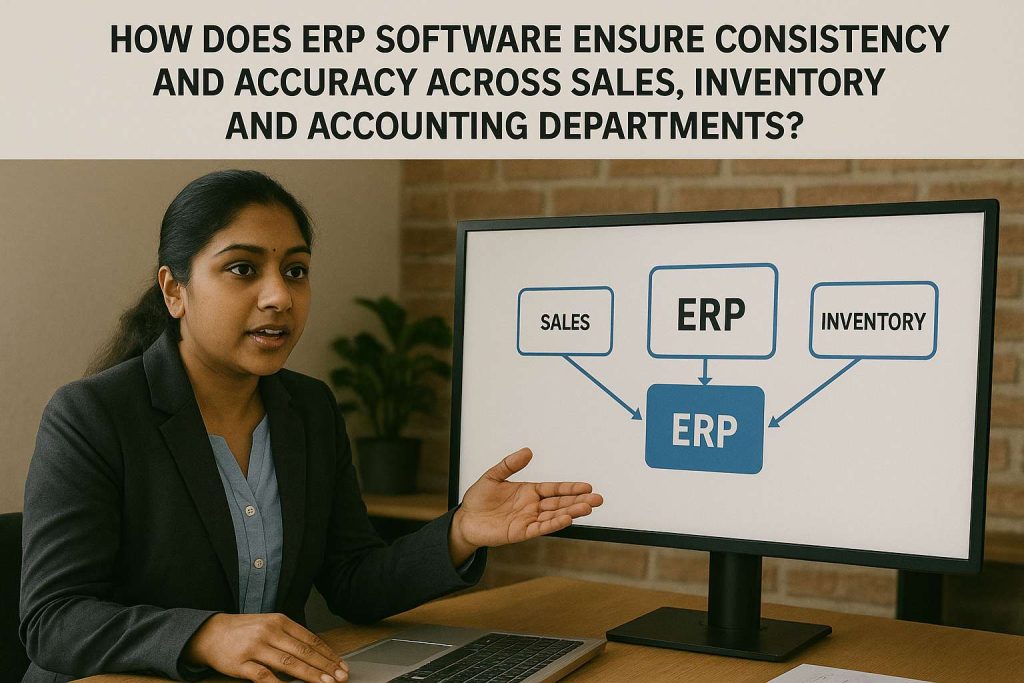
Building Brand Reputation Through Consistency
Consistency is not just operational — it’s emotional.
When customers repeatedly experience timely service, accurate communication, and dependable delivery, they associate those qualities with your brand identity.
ERP-driven businesses project an image of efficiency, trust, and professionalism, which naturally attracts referrals and long-term partnerships.
Enabling Personalized and Predictive Service
By centralizing sales and customer data, ERP enables businesses to track buying behavior, order history, and payment patterns.
This helps companies design personalized offers, anticipate customer needs, and maintain proactive engagement.
For example, automatic reminders for reorders, seasonal stock suggestions, or credit alerts — all powered by ERP analytics — enhance satisfaction and create loyal customers who value the relationship beyond a single purchase.
From Transactions to Relationships
In a connected business environment, success is no longer about completing transactions — it’s about building relationships.
ERP helps businesses shift from reactive selling to relationship-driven customer management, supported by real-time insights and consistent performance.
When every interaction — from quotation to delivery — is handled seamlessly, customers become long-term partners, not one-time buyers.
Get a Free Demo of WiderERP Today!
Zymofar Dynamic Products Pvt. Ltd.
Website: www.zymofar.com
Phone: +91 70903 35533
Location: Bangalore, India
Transform your business operations with WiderERP — where efficiency meets consistency.
Book your free consultation or demo today and experience the difference of a truly unified ERP system.